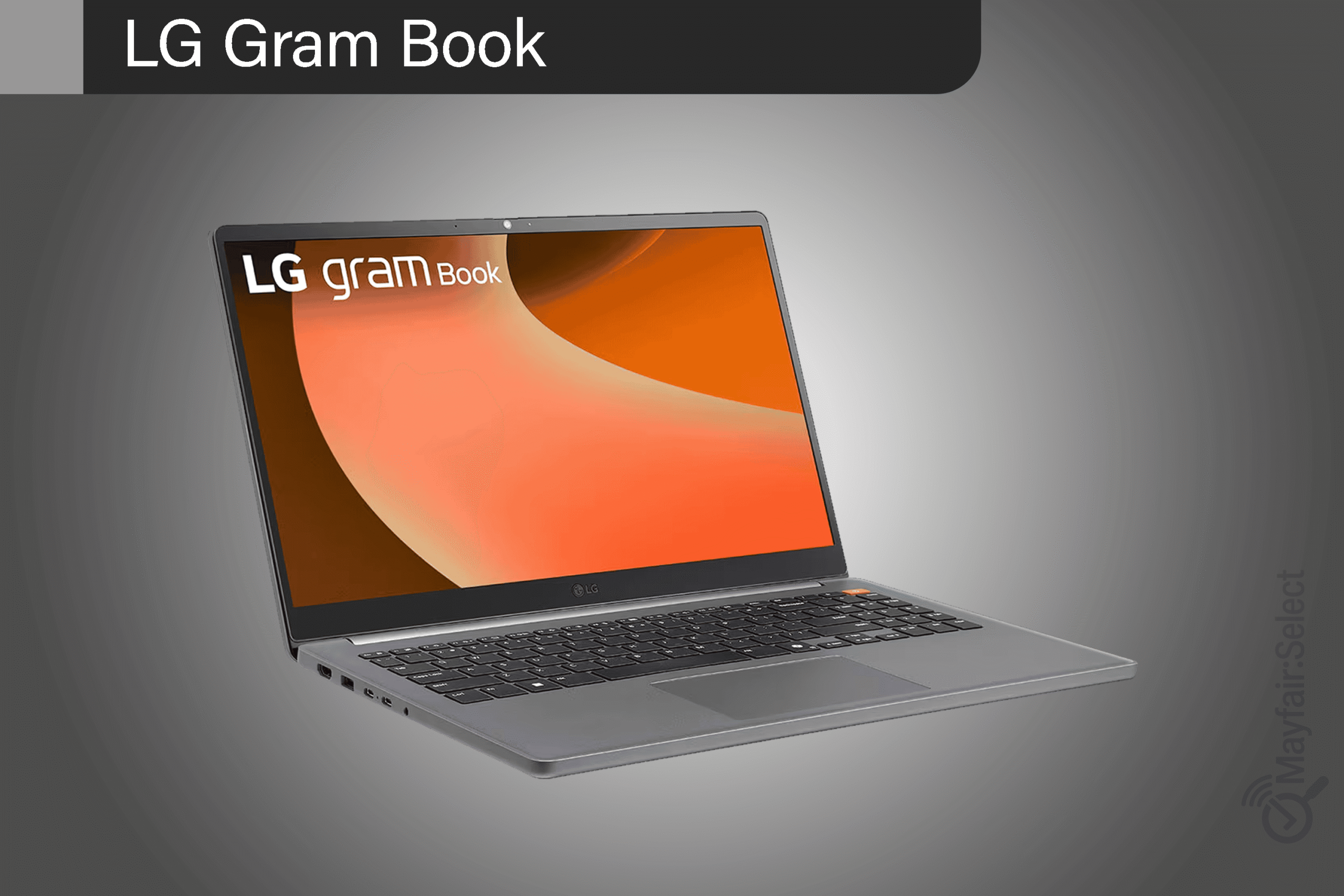
LG Gram Book (2026) Review: Is it a Worthy Investment or is the MacBook Neo the Better Choice?
If you are searching for the best laptop for office work or a practical device for students, the LG Gram Book has likely caught your attention, But is it truly worth investing £461 ($620)? In this comprehensive guide, we will dive into its real-world performance and compare it against its toughest market rivals to help you make a smart, well-informed purchase decision.
With a weight exceeding 1.5 kg, LG appears to be stretching the limits of its “Gram” brand identity a name famous for ultra-lightweight portability, With this version, LG is attempting to offer a more affordable entry point into its premium lineup, but the overall performance positions it more as a mid-range device rather than a standout premium option in its price bracket. Although it offers an acceptable user experience, its price remains uncomfortably close to higher-tier categories, while some build elements fail to reflect the quality found in competitors within the same rangege category rather than a standout premium option.
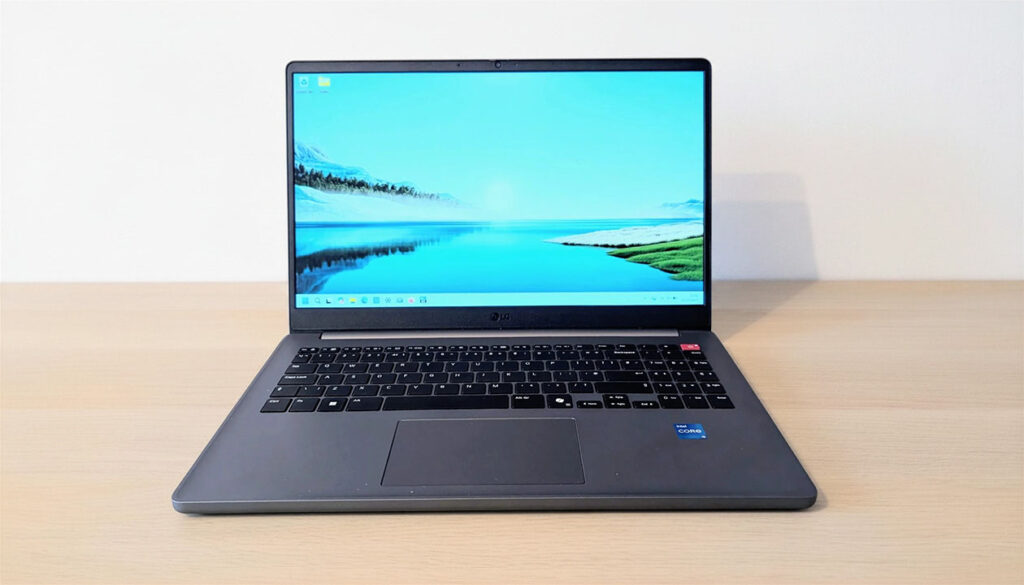
Technical Specifications Table:
| Component | Detailed Specifications |
| Processor | Intel Core i5-1334U (13th Gen) |
| RAM | 16 GB DDR4 |
| Storage | 512 GB SSD |
| Display | 15.6” IPS, 1920×1080 Resolution, 60 Hz |
| Weight | 1.65 kg (Above typical series standards) |
| Ports | 2x USB-C 3.2, 1x USB-A 3.2, HDMI 2.1, 3.5mm Jack |
| Battery | 6–7 Hours (Below average) |
Pros and Cons:
Positioning within the LG Gram Family:
The LG Gram Book is a new addition to the popular Gram lineup, designed to fill a noticeable gap in LG’s ecosystem: the mid-range segment.
The Gram series has long been known for its excellent hardware, ultra-lightweight designs, and premium pricing that often exceeds the $1,000 mark. Users typically pay a premium for the luxurious build quality and the company’s relentless focus on keeping the weight close to 1 kg.
The Gram Book represents a different approach — an attempt by LG to create a solid mid-range laptop without the extreme obsession with shaving off every extra gram.
Build Quality and Hardware Specifications:
Weighing 1.65 kg, this laptop’s weight might justify a different branding altogether. Instead of high-end premium components, this device targets the mid-tier market. It features a 1080p display and a 13th Gen Intel Core i5 processor, accompanied by a full number pad. However, the balance between price and actual performance feels somewhat uneven.
Target Audience:
- Students: For daily browsing, studying, and media consumption.
- Office Workers: Ideal for Word and Excel tasks for users who don’t rely on heavy software or frequent mobility.
While there are some nice touches, the overall impression remains that of an ordinary device in most aspects.
Pricing and Competition:
The LG Gram Book starts at $620 (£461) and is currently available in the US, UK, and Australia, At this price, it cannot truly be classified as an “economy” or budget device.
Historically, Gram series prices have been high; while this model is cheaper than its siblings, the issue is that superior options exist at the same cost.
The most prominent competitor isn’t a Windows machine, but the new MacBook Neo from Apple—the company’s first “budget” laptop.It offers a smoother user experience an all-metal chassis, a superior display, and a more competitive starting price of $599.

Comparison Table:
| Category | LG Gram Book | Apple MacBook Neo |
| Base Price | $620 / £461 | $599 / £445 |
| Processor | Intel Core (Up to Ultra 7 256V) | Apple A18 Pro (6-Core) |
| GPU | Intel Arc 140V Graphics | Integrated 5-Core GPU |
| RAM | 16 GB DDR5 | 8 GB Unified Memory |
Design and User Experience:
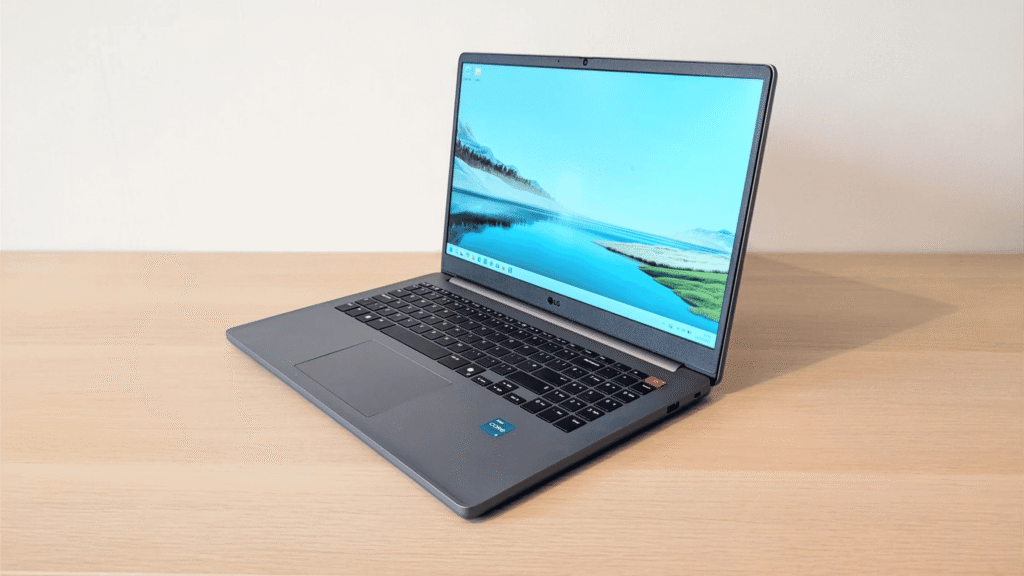
From an aesthetic standpoint, the device is not particularly striking at first glance It features a traditional gray chassis with a minimalist Gram logo on the lid.The only unique touch of color is the red power button, which subtly evokes the classic ThinkPad navigation nubThis “no-nonsense” design may appeal to those who want a laptop for focused work without flashy aesthetics or keyboard backlighting.
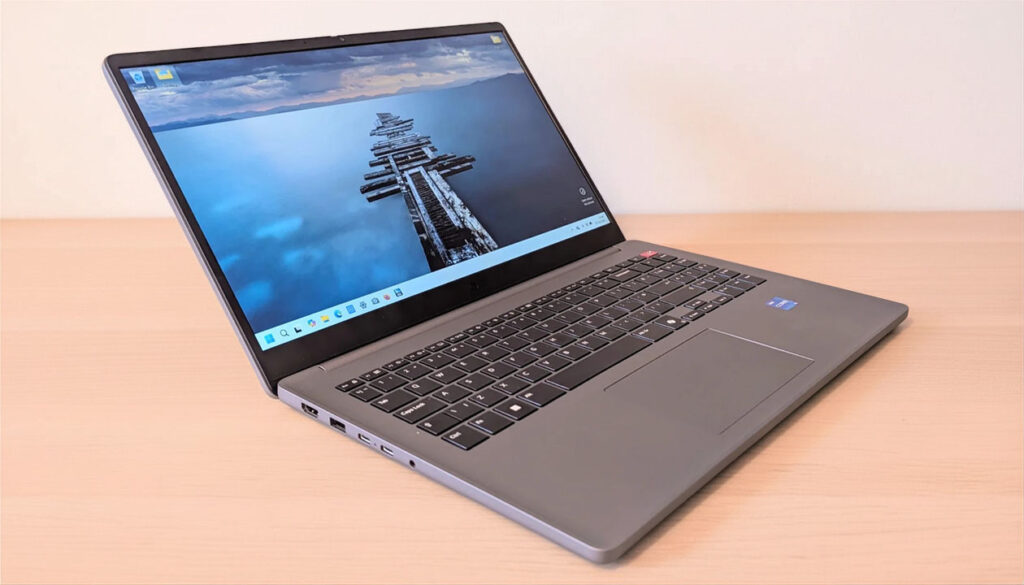
Keyboard:
The keyboard is decent but lacks tactile depth, and the keys feel slightly mushy under heavy pressure. However, the key spacing, key size, and the inclusion of a numpad still provide a comfortable typing experience.
The touchpad is arguably one of the device’s weakest aspects in terms of quality. It feels cheap and overly plastic, lacking the rigidity and premium feel found in other laptops within this category, making an external mouse feel almost essential.
Ports:
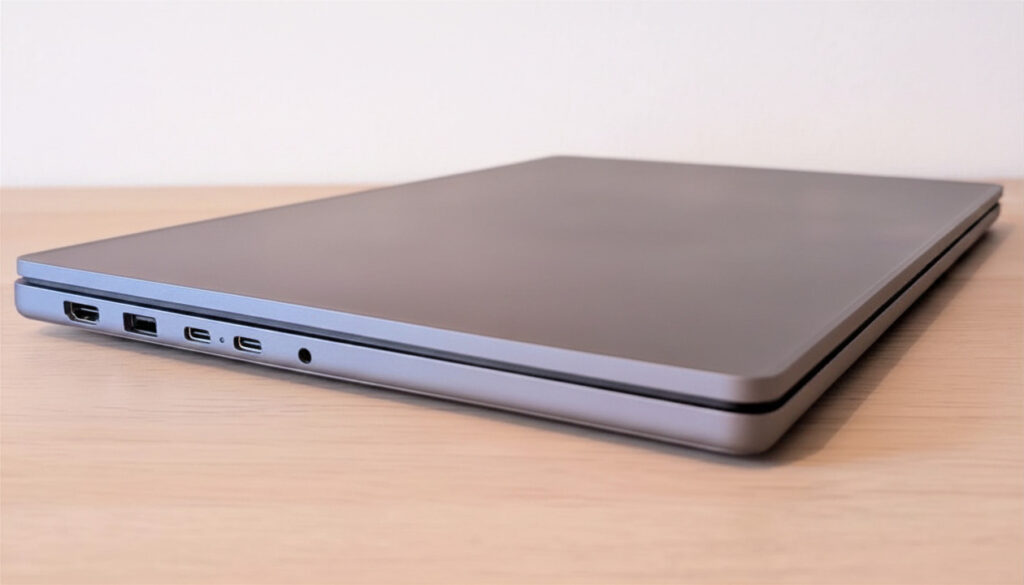
The device comes with a wide variety of ports.
Left Side
This side includes:
- An HDMI port for connecting an external monitor or TV.
- An additional USB Type-A port.
- Two USB Type-C x2 ports with PD charging support.
- A 3.5mm audio jack for headphones or a microphone.
Right Side
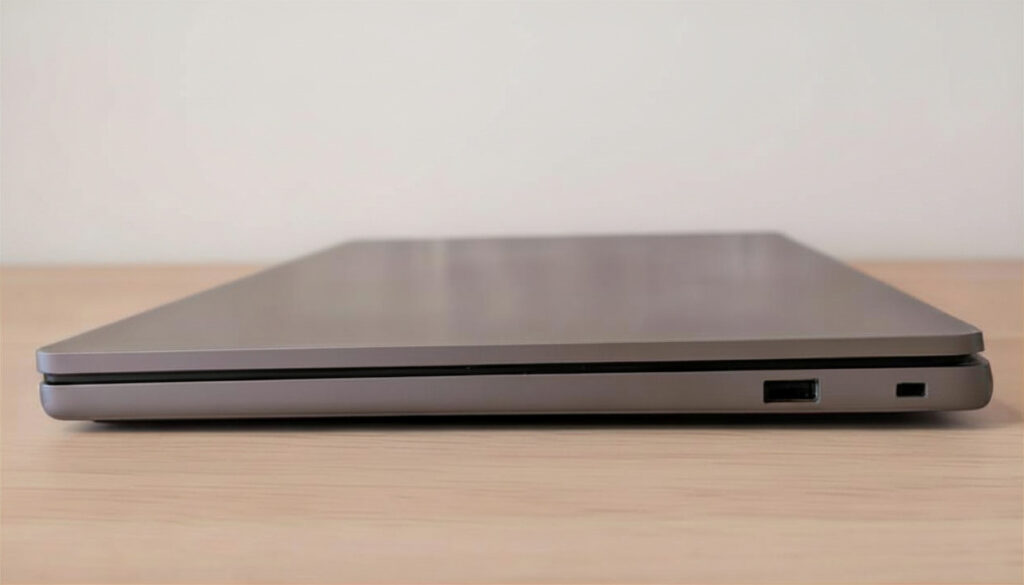
This side includes:
- A standard-sized USB Type-A port for connecting a mouse, keyboard, or external storage devices.
- A USB Type-C port with PD (Power Delivery) support, allowing the laptop to be charged via USB-C in addition to data transfer and possibly video output depending on the model.
The design appears:
- Slim and straight with slightly curved edges.
- Finished in a matte metallic grey color.
- Equipped with small rubber feet underneath to improve stability and ventilation.
- The display is a standard IPS panel; performance is adequate in good lighting but lacks the brightness or color vividness that would set it apart from rivals.
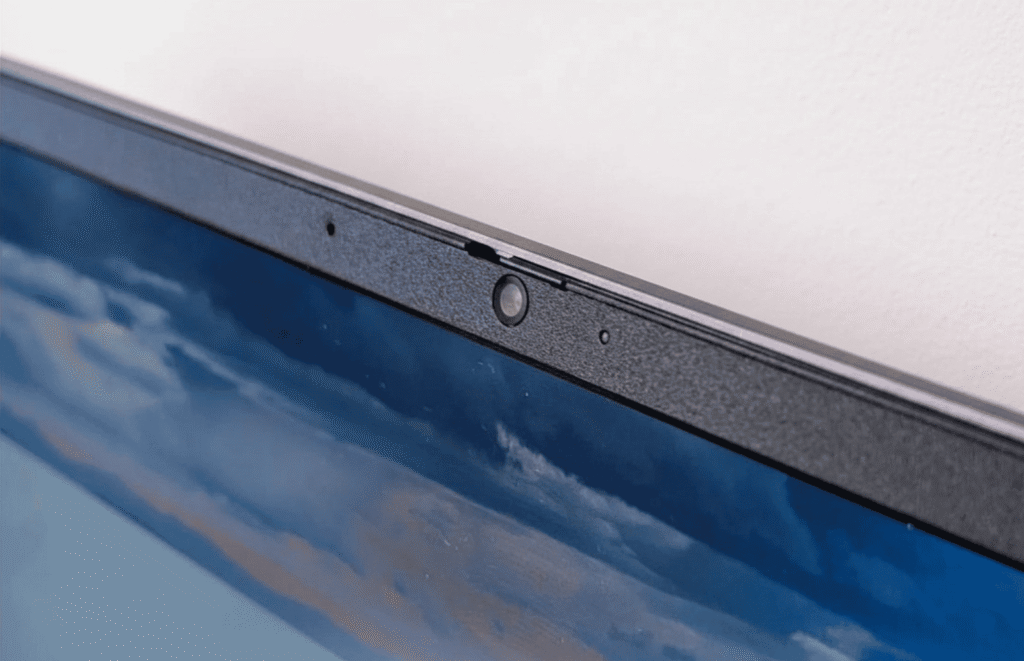
- The webcam is 720p sufficient for basic needs but falls short for professional-grade video calls, though it does feature a physical privacy shutter.
Performance and AI Features:
The Intel Core i5-1334U processor isn’t powerful enough for high-demand tasks, it provides reliable performance for daily office work, which is its primary focus rather than gaming or creative software, Benchmarks showed modest graphics results and limited productivity gains,In tests like 3DMark and Geekbench, the device failed to reach impressive scores.
Battery and Charging:
Battery life is mediocre,It lasted only 7 hours in video playback tests and less than 6 hours in real-world usage. Charging speeds are standard, taking about two hours for a full charge, as the USB-C ports do not support advanced fast-charging protocols..
One controversial aspect is the inclusion of the dedicated Copilot button. Despite this, the processor lacks a dedicated NPU (Neural Processing Unit) for local AI processing, meaning the laptop does not qualify as a true Copilot+ PC and therefore cannot support advanced on-device AI features such as Recall. Instead, AI-related tasks rely primarily on cloud-based processing, which may raise potential privacy concerns for some users.
That said, the Copilot button still functions as intended, instantly launching the chatbot with a single press. In everyday usage scenarios — such as running 8 to 10 browser tabs alongside Microsoft Office applications — the system remains stable and responsive, although performance begins to decline under heavier multitasking workloads.
Final Verdict:
Overall Rating 2.5/5
Value for Money 2/5
Performance 3/5
Design 3/5
Battery 2/5